
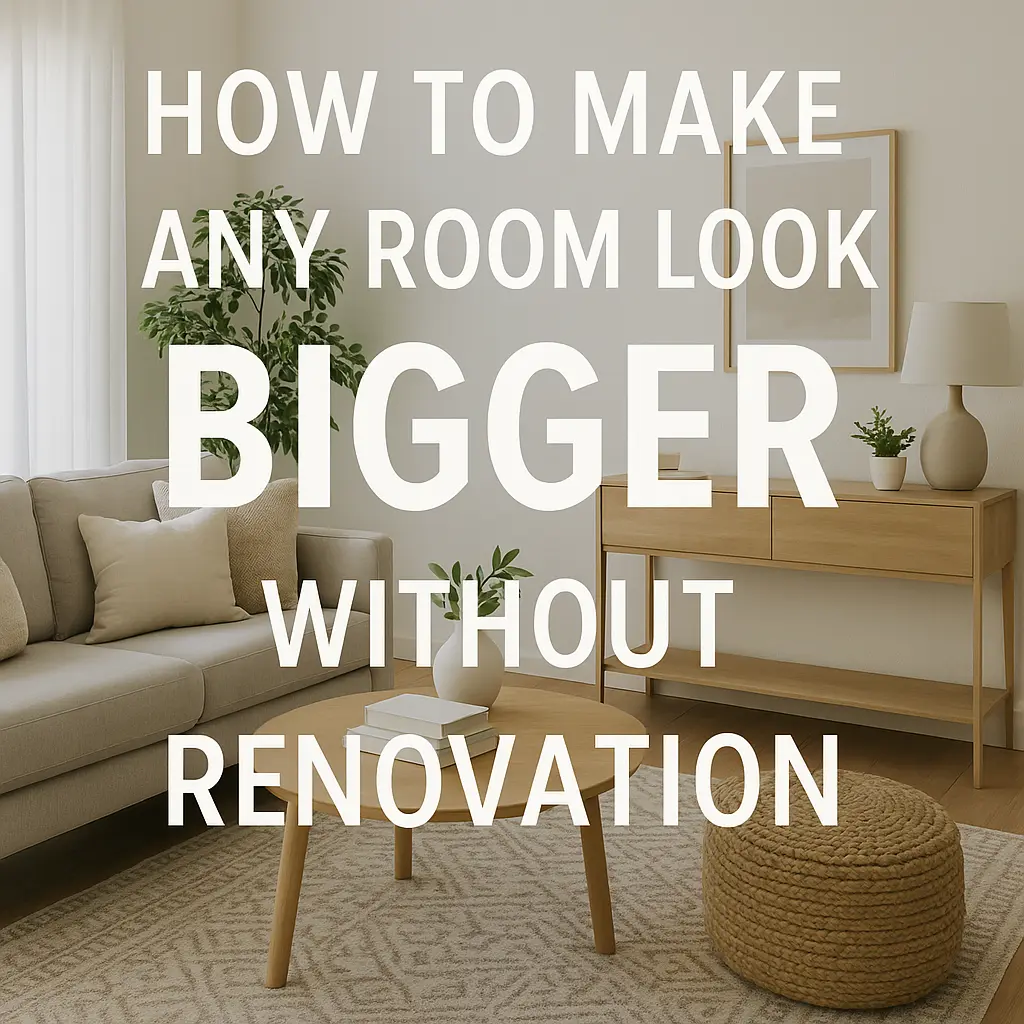
Not everyone has the budget, time, or ability to knock down walls and expand their living space. But here’s the good news — you can make a room feel significantly bigger using simple design tricks, smart furniture placement, and a few strategic changes.
The key is to create the illusion of more space by maximizing light, using colors wisely, and reducing visual clutter. Whether you live in a small apartment or just want to make your home feel more open and airy, these tips will help you transform any room without a single renovation.
1. Embrace Light Colors
Light colors are your best friend when it comes to making a room feel bigger. Soft shades like white, cream, pale gray, and pastel tones reflect more light, making walls seem farther apart.
If you love bold colors, you don’t have to give them up completely — use them in small doses, such as throw pillows, artwork, or rugs. But for large surfaces like walls and floors, keep it light and neutral for an expansive effect.
2. Let in Natural Light
Nothing opens up a space like natural light. Avoid heavy drapes or dark blinds that block sunlight. Instead, use sheer curtains or light-filtering shades that allow daylight to flow in.
If your windows are small, position mirrors across from them to reflect the light and double its effect. Even a small increase in natural brightness can make a huge difference in how open your room feels.
3. Use Mirrors Strategically
Mirrors are one of the most powerful tools in interior design for creating the illusion of space. A large wall mirror can make a narrow room look twice as wide, while mirrored furniture adds depth without adding clutter.
For the best results, place mirrors where they can reflect both natural light and attractive elements of the room, like plants or artwork.
4. Choose Multi-Functional Furniture
Furniture can easily overwhelm a small room if it’s bulky or unnecessary. Look for pieces that serve more than one purpose, such as a coffee table with storage, a sofa bed, or an ottoman that doubles as seating and storage.
When choosing furniture, opt for items with exposed legs or open bases. They allow light to pass through, creating a sense of openness compared to solid, blocky pieces.
5. Arrange Furniture to Create Flow
How you arrange your furniture has a big impact on how spacious a room feels. Avoid blocking pathways or crowding furniture against every wall. Instead, allow space around and between pieces to create visual breathing room.
If you have a small living room, consider floating your sofa away from the wall with a slim console table behind it — this creates depth and prevents the “everything crammed to the edges” look.
6. Keep Clutter to a Minimum
Visual clutter can make even a large room feel cramped. Keep surfaces clean and limit decorative items to a few meaningful pieces. Store everyday items in baskets, bins, or cabinets to keep them out of sight.
Try adopting the “one in, one out” rule — for every new decorative or functional piece you bring in, remove one you no longer need.
7. Add Vertical Interest
When floor space is limited, think vertically. Use tall bookshelves, vertical wall art, or plants that draw the eye upward. This creates a sense of height and makes ceilings feel higher than they are.
You can also install shelves closer to the ceiling to store less frequently used items, freeing up lower shelves for everyday essentials.
8. Use Rugs to Define Spaces
Rugs can help visually separate different areas in a room, which is especially useful in open-plan spaces. Choose a rug that’s large enough to fit under most of your furniture in the area.
A rug that’s too small can make a space feel disconnected, while a larger rug helps tie everything together, making the room feel more expansive.
9. Incorporate Glass and Lucite
Transparent materials like glass, acrylic, or Lucite can make furniture almost disappear into the space. A glass coffee table, for instance, provides function without blocking sightlines.
Using see-through elements keeps the room visually open while still providing the surfaces and functionality you need.
10. Keep a Consistent Color Flow
Rooms feel bigger when there’s visual continuity. Avoid chopping up a small space with too many contrasting colors. Instead, choose a consistent palette for walls, floors, and major furniture pieces.
Even if you love variety, you can introduce different textures and subtle variations within the same color family to keep things interesting without breaking the sense of flow.
11. Hang Curtains High and Wide
Mounting your curtain rods closer to the ceiling — and extending them beyond the window frame — creates the illusion of taller windows and more space.
This trick draws the eye upward and allows more natural light to enter when the curtains are open. Choose lightweight fabrics to keep the airy feel intact.
12. Opt for Reflective and Glossy Finishes
Surfaces that reflect light, such as glossy paint, metallic accents, or high-shine flooring, help bounce light around the room. This can make the entire space feel brighter and more open.
You don’t have to go overboard — a few reflective accessories, like a metallic lamp base or a glossy white cabinet, can make a big impact.
Final Thoughts
Making a room look bigger without renovation is all about creating visual tricks that fool the eye into perceiving more space than there actually is. Light, color, furniture choice, and layout all play a role in this transformation.
By keeping clutter to a minimum, using light colors, and incorporating reflective surfaces and vertical elements, you can turn even the smallest room into an inviting, airy retreat.
Best of all, these changes are budget-friendly and reversible, making them perfect for renters or anyone who wants a quick upgrade without the mess of construction.